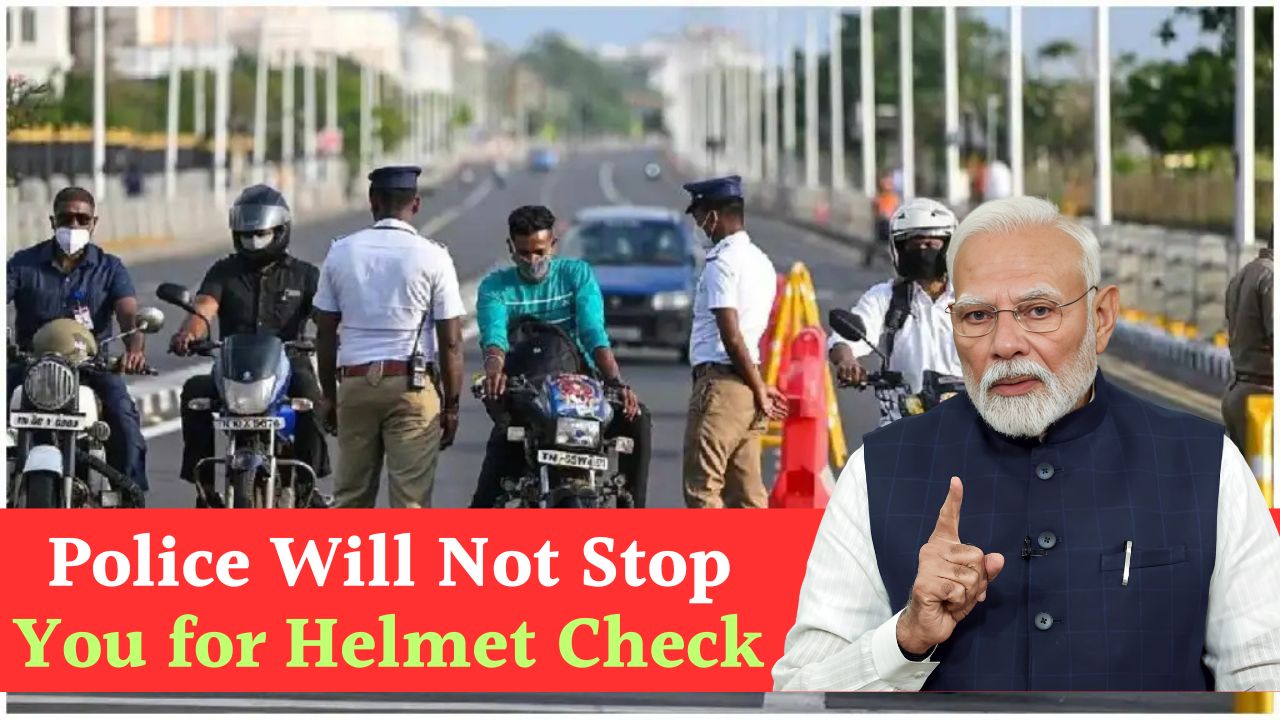
A new set of traffic rules has now been implemented across several states in India, bringing a significant change to how challans are issued for two-wheeler riders. According to the updated guidelines, traffic police will not issue a challan if the rider is not wearing a helmet at the time of stopping. Instead, stricter verification procedures will be followed before issuing any penalty.
Why the New Rule Was Introduced
This rule was implemented to reduce conflicts, ensure correct identity verification and prevent misuse of spot challans. Authorities observed that many riders tried to flee, argued with officers or provided incomplete information when stopped for helmet violations. With the new system, the process becomes streamlined and more accountable.

Helmet Remains Mandatory for All Riders
Although the challan process has changed, the government has made it clear that helmets remain compulsory for both riders and pillion passengers. Anyone riding without proper headgear is still breaking the law. The difference is that police will now verify the vehicle registration number, driving licence details and previous violations before issuing any challan.

Digital Enforcement Using CCTV and ANPR
To make enforcement stronger, traffic departments are now relying more on digital monitoring. CCTV cameras and automatic number plate recognition (ANPR) systems record riders violating helmet rules. These violations are then processed digitally, and e-challans are sent directly to the vehicle owner’s registered mobile number.

No On-the-Spot Fines for Helmet Violations
The updated rule focuses on eliminating physical interactions. Riders without helmets will not be stopped unnecessarily in the middle of the road. Instead, the violation will be recorded digitally and the challan will be issued later. This avoids traffic jams, reduces road-side disputes and ensures fair action.

Safer Roads Through Strict Monitoring
Authorities believe this new approach will encourage people to wear helmets consistently, knowing that digital systems cannot be avoided. It is expected to improve road safety and reduce the risk of head injuries, which remain the leading cause of death in two-wheeler accidents.
What Riders Should Keep in Mind
Despite the change in challan procedure, the safety responsibility lies with the rider. Wearing a helmet is not just a legal requirement but a life-saving habit. Riders should ensure they use ISI-marked helmets and ride responsibly.