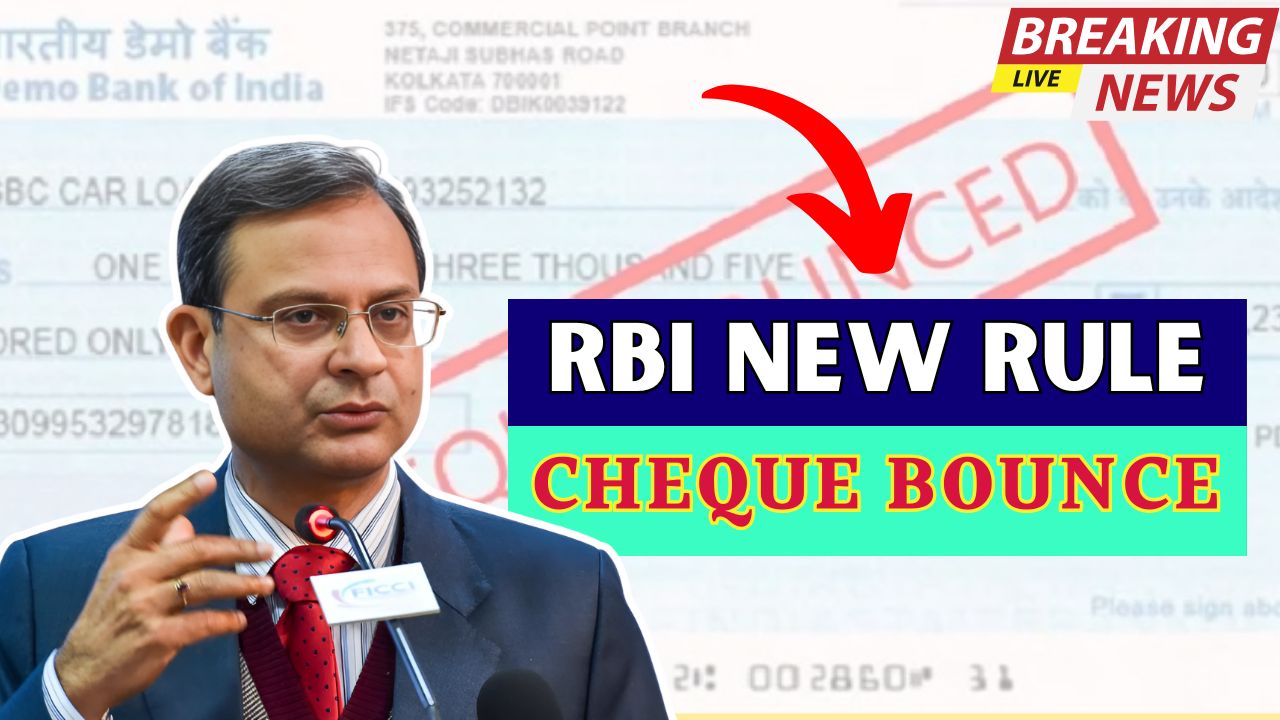
Cheque transactions have always played a crucial role in business deals, rent agreements, loan repayments, and everyday payments. However, cheque bounce cases have also become increasingly common, leading to financial loss and legal disputes.
To reduce such cases and strengthen trust in cheque payments, stricter rules and penalties have now been introduced. These new provisions significantly increase punishment, fines, and court-related procedures for anyone whose cheque gets dishonoured.
Stronger Penalties to Protect Payees
Under the updated legal provisions, bouncing a cheque is no longer treated as a minor issue. If a cheque is dishonoured due to insufficient balance or any other preventable reason, the person who issued the cheque can now face severe consequences. Courts have been empowered to issue strict orders, including imprisonment of up to two years and fines that may go up to double the cheque amount.

Double Fine on Bounced Cheques
One of the biggest changes is the imposition of a fine that can be up to twice the cheque’s value. This increased penalty aims to compensate the payee for the financial inconvenience and discourage anyone from issuing cheques without proper funds. With the possibility of a heavy fine, individuals and businesses are expected to be more cautious before issuing cheques.
Jail Term for Repeat or Serious Offences
For serious violations or repeat cheque bounce incidents, the court can order imprisonment. The jail term can extend up to two years, depending on the severity of the case. This strict step has been introduced to ensure that people do not misuse the cheque facility or intentionally defraud others.

Court Fees and Faster Disposal of Cases
To speed up the settlement of cheque bounce cases, procedural changes have also been made. Fast-track mechanisms aim to ensure quicker hearings and faster judgments, preventing long delays.
The person who issued the cheque may now also be required to pay additional court and legal fees during the proceedings, making the consequences more financially burdensome.

Banks Can Restrict Cheque Book Facilities
In cases of repeated dishonour, banks have been given the authority to restrict or suspend cheque book issuance for the account holder. This step ensures that habitual offenders are held accountable and reduces the risk of further fraud or inconvenience to others.
Why These Stricter Rules Matter
Cheque bounce cases affect business transactions, trust between parties, and day-to-day financial commitments. The new rules aim to restore confidence in cheque-based payments by making legal consequences tougher and more efficient. With stricter fines, quicker court action, and the possibility of jail time, cheque users are expected to handle their financial responsibilities more carefully.
