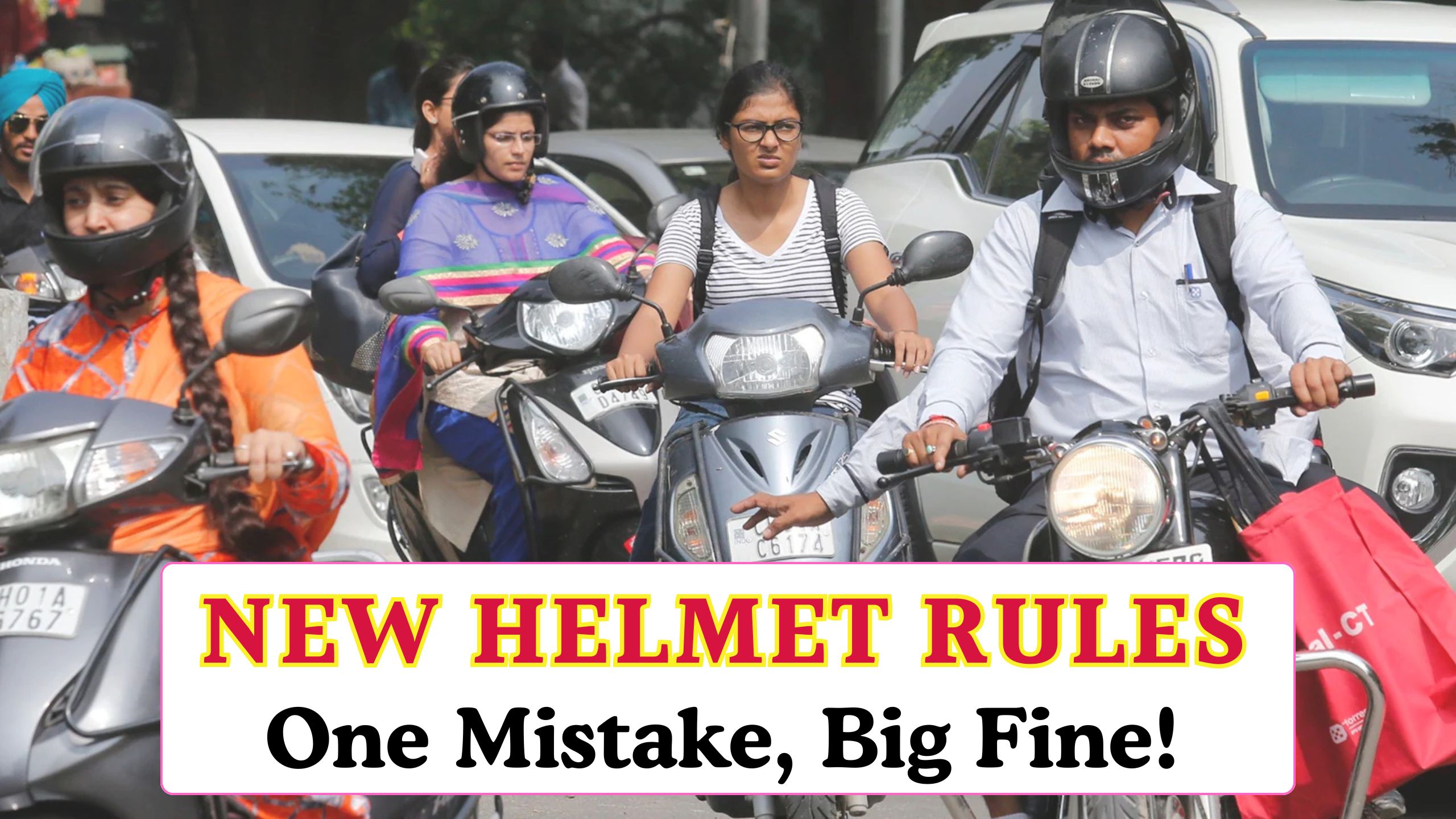
The government has introduced updated helmet regulations for 2025, and these rules are stricter than ever. With rising road accidents involving two-wheelers, authorities have decided to enforce tighter safety standards. Under the new rules, even a small mistake while riding can now lead to a heavy fine, making it essential for every rider to understand what has changed.
Why the New Helmet Rules Were Introduced
Two-wheeler accidents continue to be one of the highest contributors to road fatalities in the country. Many of these deaths occur due to improper or non-standard helmets that fail to protect riders during impact. The new rules aim to reduce these incidents by ensuring that every rider follows the right safety practices and uses only approved protective gear.

Only BIS-Approved Helmets Allowed
The updated rule makes it mandatory for riders and pillion riders to wear BIS-certified helmets. Helmets without proper certification, imported helmets without approval or decorative helmets sold by local vendors are now considered illegal. Traffic authorities will check for certification, and non-standard helmets can result in heavy penalties.

Proper Strapping Is Now Compulsory
Many riders make the common mistake of wearing helmets without fastening the strap. Under the 2025 rules, even if the helmet is on your head, an unstrapped helmet is treated as “no helmet”. This simple negligence can lead to a substantial fine and possible license penalty. The focus is on complete protection, not just compliance on paper.

Fines Increased for Violations
The penalties for helmet-related violations have been increased across several states. Riders caught without proper helmets may face steep fines, license points, and in some cases, temporary suspension. The government wants to ensure that riders take road safety seriously and adopt responsible riding habits.

Rules Apply to Pillion Riders Too
The new regulations clearly state that pillion riders must also wear certified helmets. No exceptions are allowed. Whether it’s a short-distance ride, a local market trip or a quick commute, both riders must follow the rule or face penalties. The move aims to reduce injuries among passengers who often ignore safety.
Greater Police Surveillance and Digital Monitoring
Authorities have begun using CCTV cameras, digital challan systems and automated number plate recognition to detect helmet violations. This means even if you are not stopped on the road, a violation captured on camera can still result in a fine being issued to your registered vehicle number.
A Step Toward Safer Roads
The updated helmet rules mark a significant step in improving road safety. By enforcing stricter standards, the government hopes to reduce fatal accidents and promote a culture of responsible driving. Riders are encouraged to invest in high-quality helmets and follow the rules without compromise.